
By: Breannyn Dixon
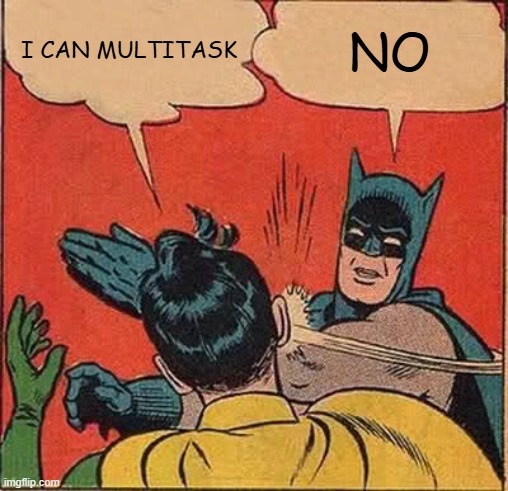
Picture this: You have a test that you need to study for. You get ready at your desk with your textbook and notes to begin studying. Then your phone goes off and before you know it, you are scrolling on TikTok or Instagram while trying to study. Does this sound like you before tests?
In this scenario, you can feel like you are getting a lot more done than you are because you are studying and scrolling or answering friends on your phone. There is a misconception that when you are working through multiple tasks at the same time, or multitasking, you are getting a lot done faster. However, in reality, you are actually less productive. This is called divided attention, and it could be the real reason why you are not able to remember the material you try to study before a big test or final. So how do you avoid falling into the trap of divided attention? We will dive into different solutions for your scrolling time and study time not overlapping. What is Divided Attention?
To better understand divided attention, we first need to understand what attention is in the first place. Attention is a “set of processes that allow us to concentrate or focus on one set of events in our environment while ignoring the other events” (Goldstein 1) Additionally, attention is a limited resource meaning that it cannot go one forever and there is a limit to how much of it can be used at any given moment. There are two kinds of tasks that require attention: high-load tasks, which are more difficult, and low-load tasks, which are easier. High-load tasks use a lot of your available attention while low-load tasks do not use nearly as much of your attention. These low-load tasks give the illusion that people can focus on two or more tasks at a time. This is not true. In fact, when you try to do two tasks at the same time, there is a hidden attention fee. It is harder to switch back and forth between tasks, so there is an additional cost of your already limited resource of attention. How Do People Perceive Divided Attention?
Most people do not understand that severity of divided attention on their ability to complete tasks. According to Finely and their research, people who think they are good at multitasking are actually the worst. They significantly underestimate their ability to complete multiple tasks. (2) When asked to complete two simple tasks individually, these people did very well. However, when asked to do them simultaneously, they had slower reactions and were worse at the tasks overall. This is also supported by the article written by Glenn. It reads, “Heavy multitaskers are often extremely confident in their abilities," says Clifford I. Nass, a professor of psychology at Stanford University. "But there's evidence that those people are actually worse at multitasking than most people” (3). This is important for people to understand that multitasking is a taxing process which leads to worse results for one or both tasks. The risk is not worth the reward when it comes to multitasking. Divided Attention in the Classroom
The standards for classroom lectures have changed over the years to include more and more technology for both the professor or teacher and the students themselves. Think about the last time that you sat in a classroom and the professor did not use a computer or projector. Now it is normalized to have either a computer or an iPad or tablet in hand to take notes for easier access. However, this addition of more online technology, distractions have an easier way to reach students. These distractions can look like anything from movies, to messaging friends, to shopping online. Students can experience more distractions now than they ever have in the past, and it is important to understand their impact on performance in the classroom. Distractions pulling some of the student’s attention away from the material and information from any lecture can impact their ability to remember this information on a later test or exam. Research says that there is a correlation between students experiencing divided attention during lectures and lower exam scores (Glass 4). Glass explains that during their research they found that students experienced something called the selection effect. This is when there is more than one person speaking at the same time. The listener is only able to pick out the information from one person and loses all the information from the other. In lectures, this could look like a whispered conversation about dinner plans between friends or even whispered questions about the material which causes the students to miss out on the next part of the lecture. Additionally, it has been found that when a student experiences divided attention during the encoding process of learning, there is a larger interference than when there is divided attention present during the retrieval process. When encoding happens, it is the first time someone has heard certain information or learned something new (Fernades 5).
How Should You Avoid Multitasking?
Whenever you are about to start homework or study for a big test, make sure that you are only working on that assignment. Make sure that you have your phone off and away and nothing else going on in the background. If you like to do your schoolwork with music playing in the background, limit it to music that does not have lyrics to distract you. If you limit your distractions during study time, you are more likely to be successful! Keep working hard and limit those distractions, and you will be just fine! Good luck! 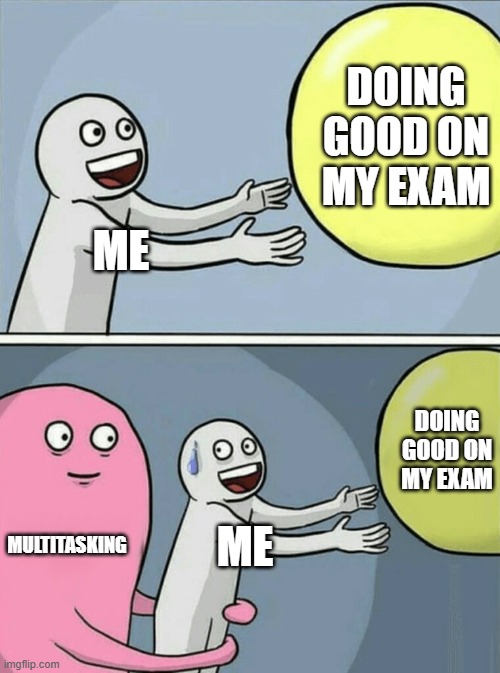
References:
Goldstein, E. B., & Hale, R. G. (2019). Attention. In Cognitive Psychology: Connecting mind, Research, and Everyday Experience (6th ed., pp. 97–133). essay, Cengage.
Finley, J. R., Benjamin, A. S., & McCarley, J. S. (2014). Metacognition of multitasking: How well do we predict the costs of divided attention?. Journal of experimental psychology: applied, 20(2), 158.
Glenn, D. (2010). Divided attention. The Chronicle of Higher Education, 31.
Glass, A. L., & Kang, M. (2019). Dividing attention in the classroom reduces exam performance. Educational Psychology, 39(3), 395-408.
Fernandes, M. A., & Moscovitch, M. (2000). Divided attention and memory: evidence of substantial interference effects at retrieval and encoding. Journal of Experimental Psychology: General, 129(2), 155.
Breannyn, I really enjoyed your blog post. You fully explained multitasking and divided attention. There are good points on how you did your research, and how that matches what you are talking about. I really like how you added how you can avoid multitasking and that there are tips to do so. This is really well done, good job!
Breannyn, great blog. The idea you expressed about limiting distractions during “studying time” is definitely something that I will have to try to implement in my studies, as I personally have a big problem with distractions, especially my phone. As someone who struggles with divided attention, do you think there are other methods that I could use to allow for better multitasking? I feel like, even if it is with two “low load” tasks, that I still struggle being able to divide my attention successfully in any way, shape, or form. Great post, I truly enjoyed reading it!
You did a great job, Breannyn, explaining divided attention in a clear and organized way. Your definitions are easy to understand the example, especially the one about studying while using social media, make the concept relatable. The research you included strengthen your argument, especially the point that people who think they are good at multi-tasking often perform worse. the classroom sections also connects the idea well to real student experiences. Overall, this was a very enjoyable read and clearly showed why multitasking can reduce performance.
Dear Breannyn, I though your post was very well written and very informative. I am guilty of dividing my attention. I never sit and do just one thing. if i am ever watching tv I always have my hands full doing something whether or not it is homework or some sort of puzzle. do you ever attempt to multitask, and does it tend to work out or not?
You did a great job Breannyn!! You got a few laughs out of me while I was reading the memes! I really enjoyed how you set up your blog post, along with how real the topic is. I unfortunately am guilty of dividing my attention and honestly I do it quite often. I also found your research to be what helped make your blog post so good!