Study Smarter, Not Harder: How “Levels of Processing” Can Change the Way You Learn

By: Braylon Boyer

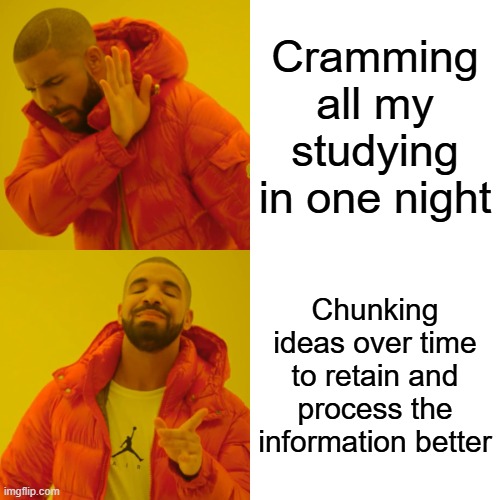
If I could go back to my first year of college, I wouldn’t tell myself to study more, I would tell myself to study differently. Like most students I thought college was cramming everything to the night before exams and reread notes a million times. It felt productive, but the results didn’t always match my effort.

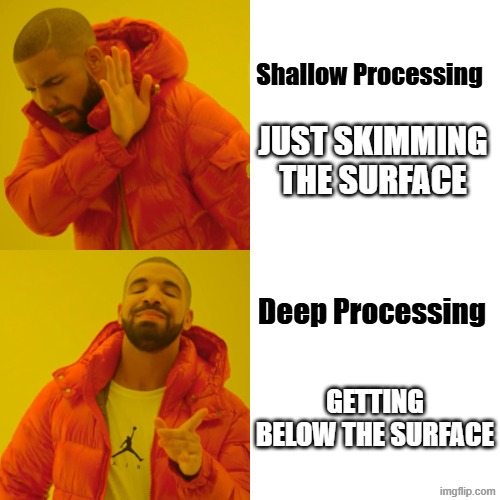
A concept that changes how we think about studying from cognitive psychology is Levels of Processing. Once you understand it, you stop wasting time on useless strategies and start using ones that work.

Continue reading “Study Smarter, Not Harder: How “Levels of Processing” Can Change the Way You Learn”

Wait… Did That Actually Happen?

How Your Memory Can Be Rewritten and What to Do About It

By: Railynn Brown

Introduction

Have you ever been talking with a friend about something that happened, and suddenly your memory of it starts to change? Maybe you were completely sure about what you saw or learned, but then someone describes it a little differently, and now you’re second-guessing yourself. This actually happened to me during my first year of college when I was studying with a group and realized later that something I “remembered” for the exam was completely wrong.

Picture this: you’re talking with a friend about something that happened last week, and they confidently say, “Remember when that car sped through the stop sign?” You pause. You thought the car just rolled through it, but now you’re not so sure. As it turns out, the way someone describes something after the fact can actually change how you remember it.

In this post, I’m going to break down the misinformation effect and source monitoring errors in a way that actually connects to your experience as a college student. Once you understand how easily your memory can be influenced, it becomes a lot easier to avoid studying the wrong thing and walking into an exam feeling confident only to be disappointed with the results.

Continue reading “Wait… Did That Actually Happen?”

Study Techniques; Spaced v.s Mass Practice

By: Leon Danta

Introduction

Have you ever tried to intensely study for a long period of time without breaks? If so, do not worry, you are amongst many who believe that this is an efficient way of studying. As a first year freshman, I came into college with some knowledge about studying, but not as much as I know now. It can be overwhelming entering a new stage in your life, especially if no one in your family was interested in furthering their education. With your first lectures you may think to yourself: Am I taking notes right? What does that mean? Is this useful? I can’t push you to study a certain way as to each their own but, personally what I thought was the best way to study was to cram everything into one session right before a test, although the outcomes varied. Or even studying for a long amount of time with no breaks.

Continue reading “Study Techniques; Spaced v.s Mass Practice”

Way of studying; Relating words to survival value

By: Joshua Stanley

Studying for classes or a test can be stressful at times, and prevent you from fully understanding the full material. Even when you prepare for a big exam you may not remember everything you studied and that can lead to an unwanted grade. A way to make your studying easier is by relating words or information to survival value. Doing this will make studying more effective because it taps into how human memory naturally works.

Our brains are wired to prioritise information that seems important for survival, so when something feels relevant to staying alive or solving real-life problems, the brain processes it more deeply and remembers it better. For example, instead of trying to memorize vocabulary or facts you can ask yourself how that information might help you in a real life situation, that way the information comes easier to remember because you related it to a real world experience. Say you were studying biology terms, you should think about how knowing them could help you identify or understand an illness.

Continue reading “Way of studying; Relating words to survival value”

The Study Hack You Need: Chunking

By: Cole Smith

When I was in High School, I found myself studying for tests the night before and cramming all the material into one night study sessions. Once I got into college, I realized my prior study habits would not get me far , given how challenging the courses can be. Little did I know that the key to studying was actually something I had been doing since I was 6 years old! When you were a kid, did the story of your parents making you memorize their phone number or a street address by learning each part sound familiar? If it does, well then, you are already familiar with the concept of chunking! Splitting up the numbers in your parents’ phone number and memorizing each section, or by splitting up your street address and memorizing the number, street, and zip code separately, and then putting it all together, is a prime example of how chunking information works (1)! 

Continue reading “The Study Hack You Need: Chunking”

Understanding Versus Memorizing; Why Elaboration Is Better

By: Courtney Hart

Have you ever crammed for a test and immediately forgot what it is you learned afterwards.  This is something I struggled with when first getting into college.  I would study right before a test or some important assignment.  I would get the topic down for the short period of time that I needed it but then when I try to recall it after a longer period. It was hard for me to remember, I used to blame my memory being bad, but I have come to realize it is just the way I was studying that was the problem.  Well, that is because I was not trying to understand the information but just memorize it.  One of the better ways to study is to understand.  And that is exactly what the purpose of elaboration is.  Elaboration is a technique that I learned that has helped me study and succeed within the learning environment. 

Continue reading “Understanding Versus Memorizing; Why Elaboration Is Better”

Not You Getting Distracted Again… 

By: Mason Johnson 

Introduction 

You know those days where you tell yourself you’re going to be super productive, get all your work done, and finally stay focused… and then somehow you end up doing literally anything else? Yeah, same. 

You sit down, open your laptop, maybe even have a snack ready, and within minutes, you’re checking your phone and giggling at random videos you didn’t even mean to tap on. Being a first-year college student is already a big adjustment, and trying to stay focused on top of that can feel impossible. 

Continue reading “Not You Getting Distracted Again… “

Why You Suck at Studying… And How to Fix It: The Hidden Problem of Cognitive Interference

By: Nate Talkad

You know that feeling when you’ve been studying for hours and hours the night before your exam, and you’re feeling prepared, and then you show up and think to yourself, “I have never seen any of this in my life”? It can be quite frustrating, confusing, and frankly a little demoralizing. But here’s the thing: your brain isn’t full of cobwebs, it’s just a little confused due to something called cognitive interference. A sneaky, everyday memory blunder that affects not just college students, but every single human without them even realizing it.

Cognitive interference happens when different memories compete with each other. Think of it like trying to listen to two people talking to you at the same time. You may catch some words from one person and some from another, and by the end of it, you’re left confused and not knowing what either of them were talking about. The same thing happens in your mind when old and new information overlap.

Understanding this phenomenon can completely change the way you study and scrape through your classes. let’s dig into what interference is, how it shows up in real life, and what the research says you can do to fix it.

Continue reading “Why You Suck at Studying… And How to Fix It: The Hidden Problem of Cognitive Interference”

Retrieval Practice: Learning that Lasts

By: Joshua Frenden

Introduction

Got a big test coming up? Need to learn something that you’ll be able to remember long term? Retrieval practice might become your new best friend. “Practicing retrieval yields significantly greater long-term retention of the studied materials than just restudying them” (Moreira et al., 2026). This method of retrieval is something that many, including myself, have found to be a very “effective… learning strategy” (Moreira et al., 2026). With the goal of “familiarity and recollection” in mind, retrieval practice might be the study method that you have been missing out on.

Continue reading “Retrieval Practice: Learning that Lasts”

“Why I Forgot Stuff During the Test After Studying Really Hard” 

By Walter Medrano

Have you ever studied really hard for a test, but when you sit down to take it, your mind just blanks out and you notice that you’re not as confident as you were while studying? That’s happened to me more than once. I’d study in my dorm, feel super confident, and then get to the classroom and suddenly forget everything. I used to think it was just nerves or stress, but it turns out there’s actually a reason this happens, and it’s called the encoding specificity principle. It may sound scary at first but it’s actually pretty cool once you understand it. 

Continue reading ““Why I Forgot Stuff During the Test After Studying Really Hard” “